Grouped by the court that kept the record, then ordered from earliest to latest. The large year is the record year, which may differ from the year of death.
How the illustrated readings work
These are LLM-assisted working transcriptions, not certified editions. Examining every supplied page does not mean every word has been deciphered. A widow is not automatically the children's mother; an executor, witness or creditor is not automatically a relative. Each case shows what was read, what changed and what remains unresolved.
Missing pages and duplicate copies
The nested John 1577 PDF includes continuation image 277, and Andrew 1598 has a supplied continuation image 124. The September 10 name audit records the renewed reading of those pages. The unrelated third screenshot in John's PDF is not part of his testament. John 1650 lacks the opening page before image 66. The two Jonet Meik PDFs and the two William 1673 PDFs represent duplicate register images. William 1673 belongs to the Lanark court, despite one copy being filed under Edinburgh.
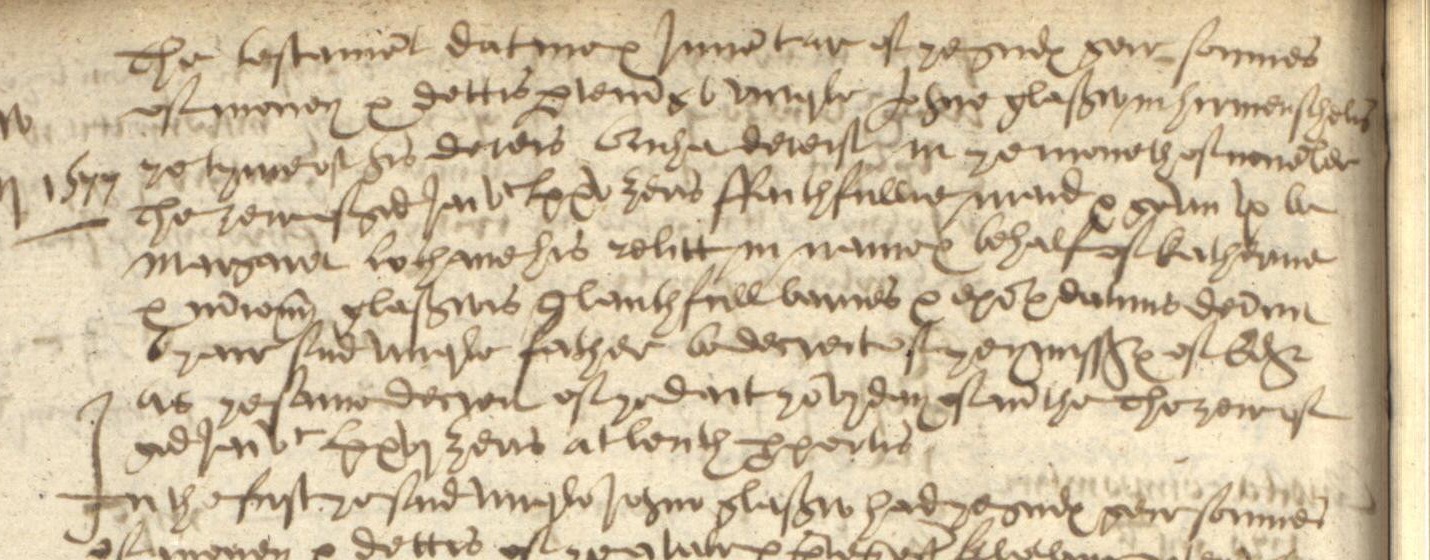
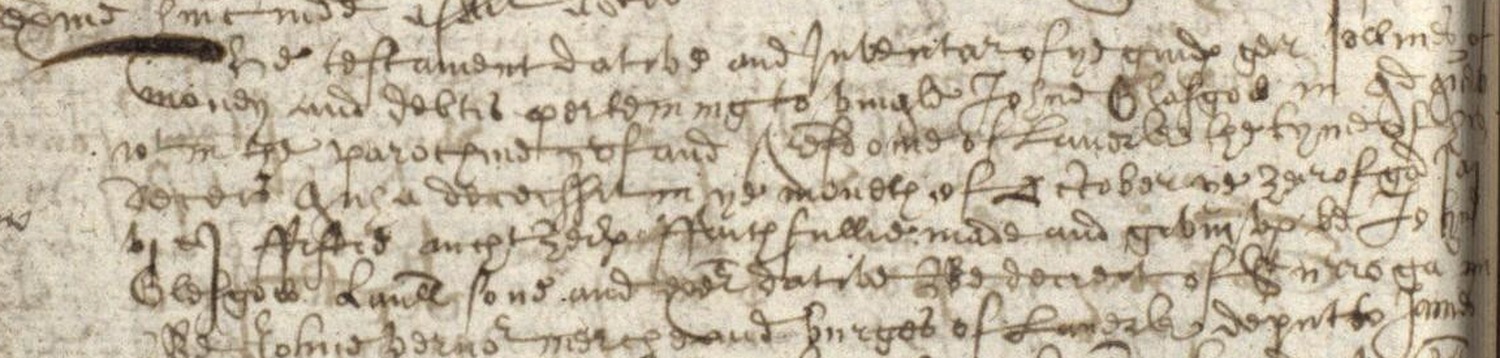
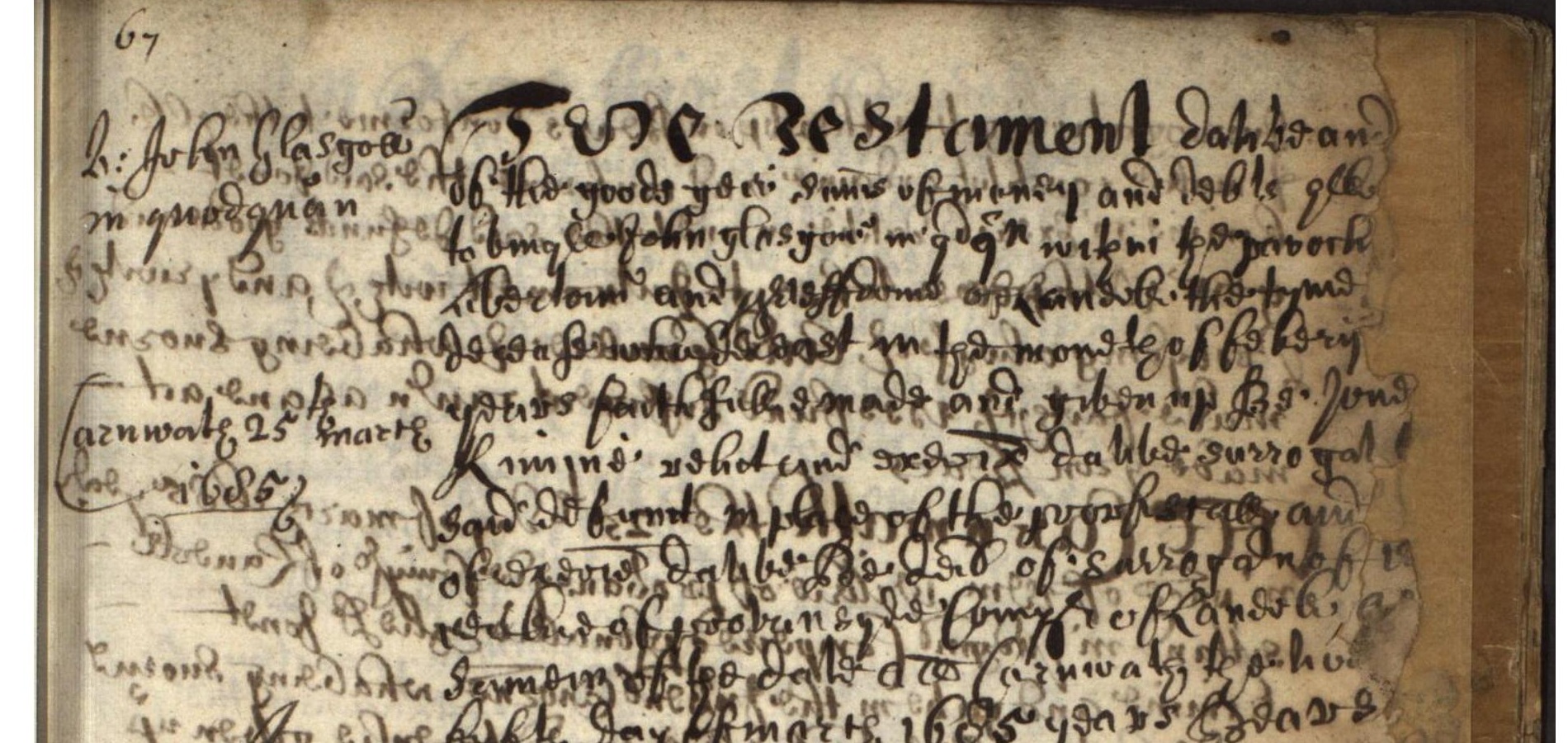
4 May 1577 (marginal court date); death in March, year unresolved
NRS Edinburgh Commissary Court CC8/8/5, images 276-277; both record images freshly reviewed
This is a court-appointed estate inventory for the late John Glasgow. It says he died in March, but the death-year numerals cannot be securely read in this review. The marginal court date is 4 May 1577.
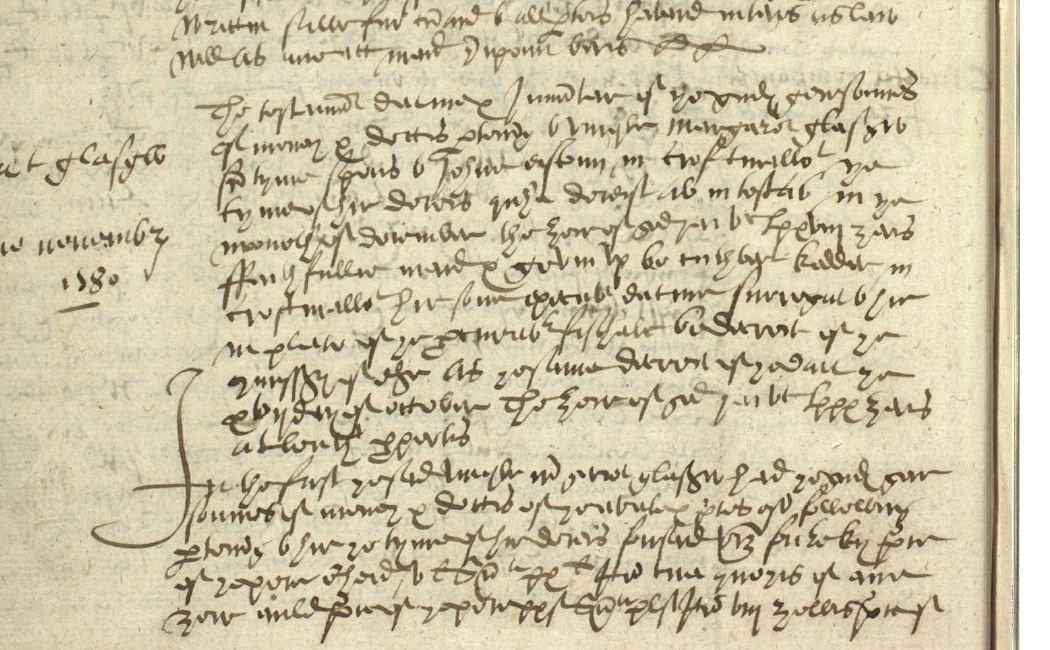
Died December [1578?]; marginal confirmation 8 November 1580
NRS Edinburgh Commissary Court CC8/8/8, images 355-356, supplied as two-page PDF
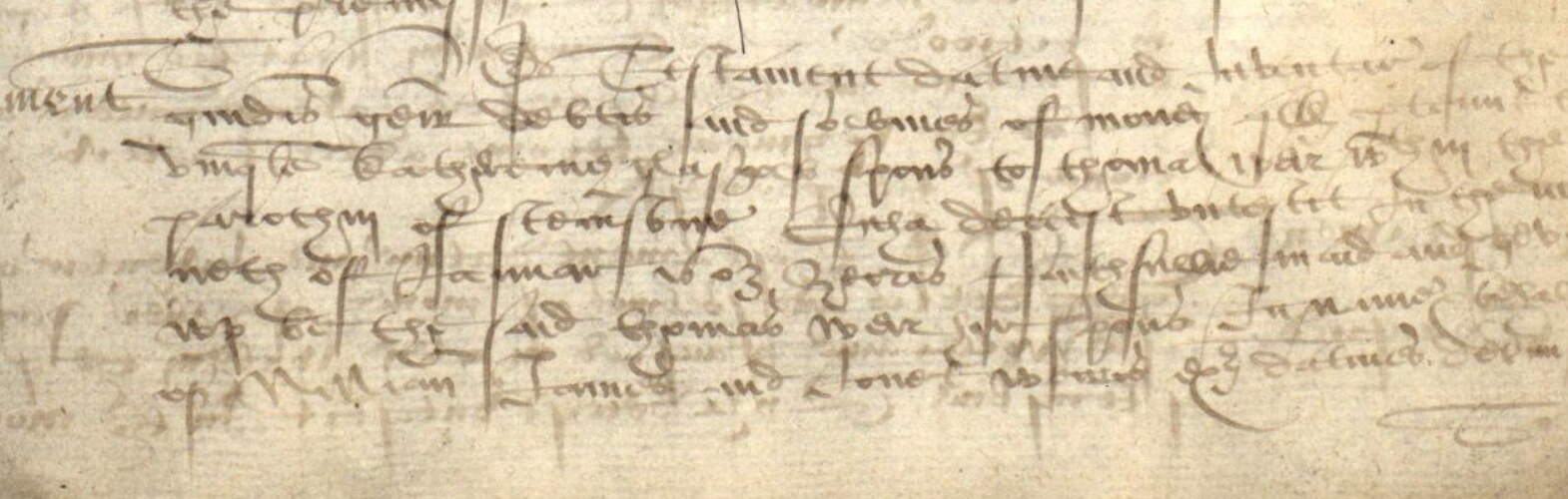
Margaret Glasgow, sometime wife of John Easton, died intestate in December, apparently 1578. Her estate was administered later; 8 November 1580 is the marginal confirmation date, not her death date.
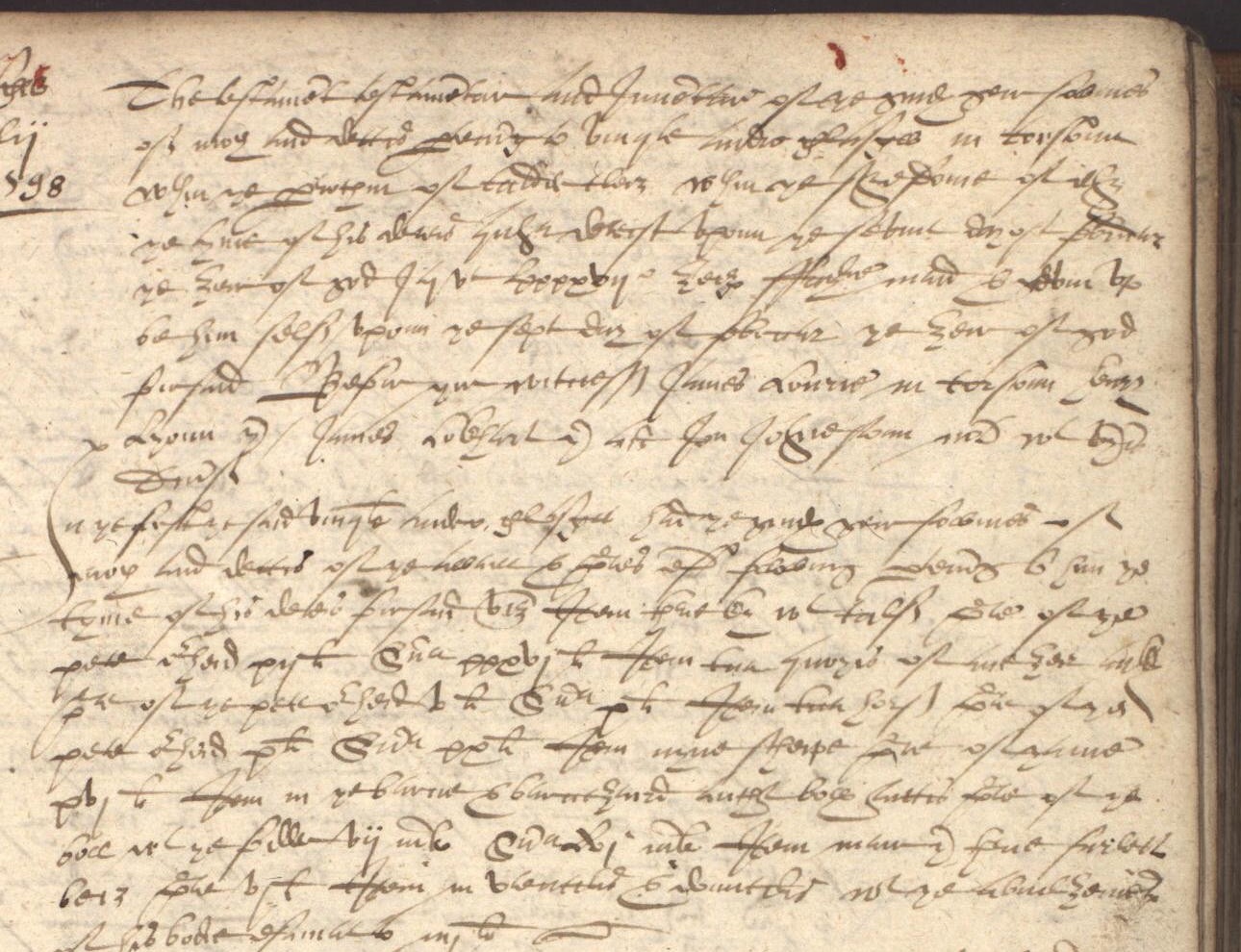
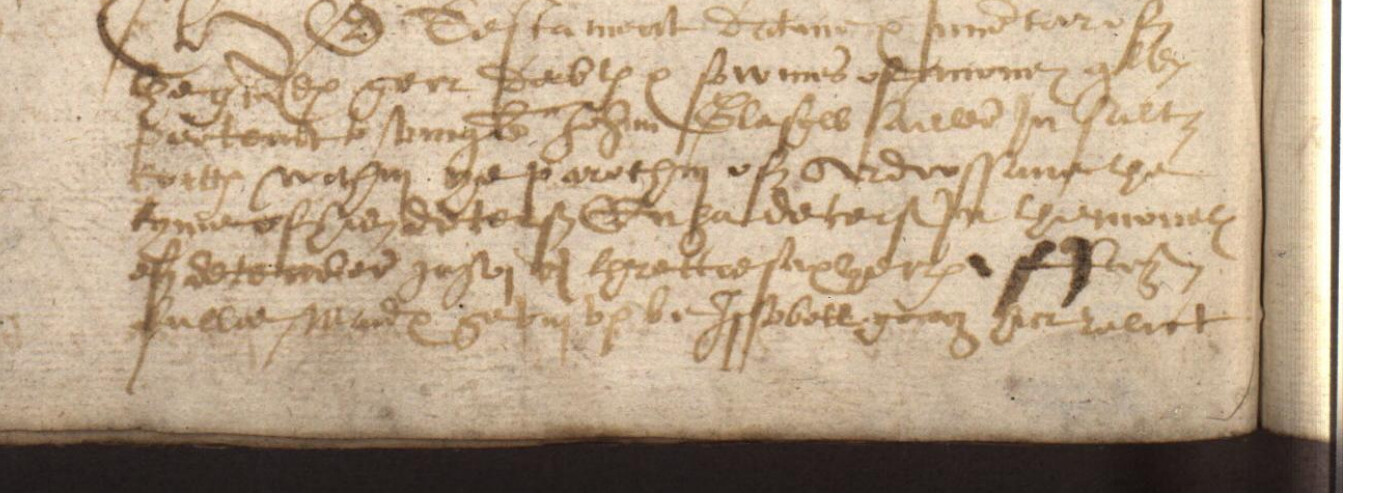
10 July 1598 marginal date; will 6 February 1597 as written; death 7 February [1597 as written?]
NRS Edinburgh Commissary Court CC8/8/32, images 123-124; both record images freshly reviewed
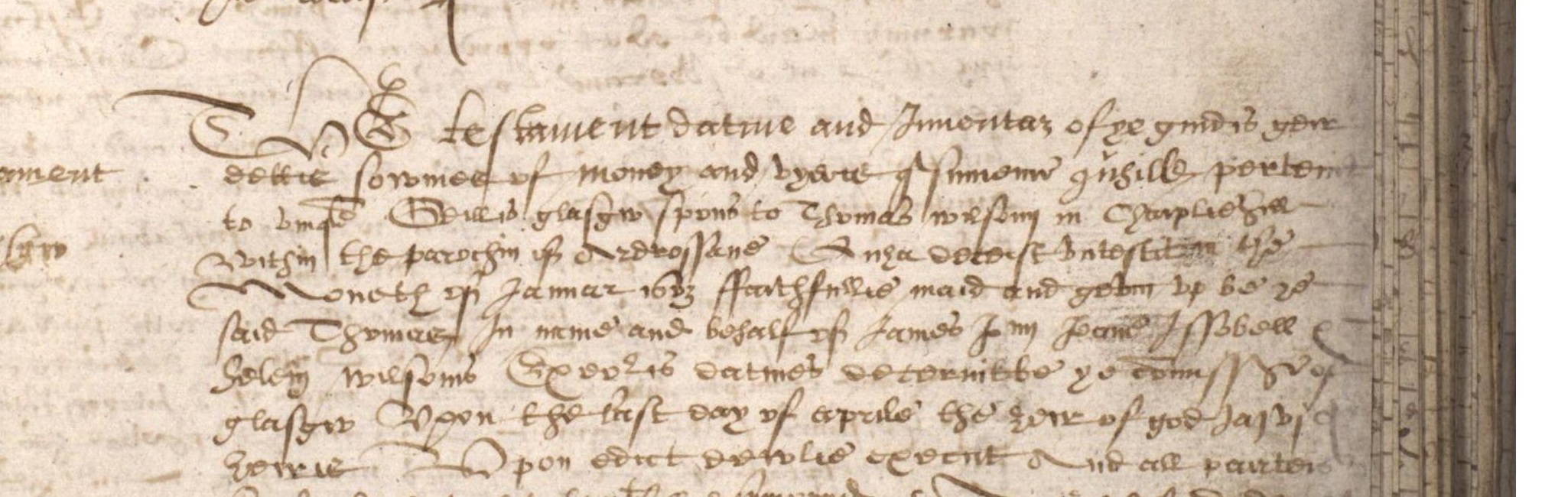
The supplied page is Andrew Glasgow's testament-testamentar and inventory. His residence is provisionally read as Corsoun in the parish of Caldercleir, sheriffdom of Edinburgh. It records his death on 7 February and says that he gave up the inventory himself on 6 February. The latter-will opening at the bottom expressly bears 6 February 1597 as written.
Katherine Glasgow is identified as the spouse of Thomas Weir in Stevenston parish. The opening gives her death in January 1603, not on the subsequent probate date. Thomas supplied the account on behalf of William, James and probably Jonet Weir; the confirmation refers to the executors’ minority. This does not by itself explicitly state their parentage.
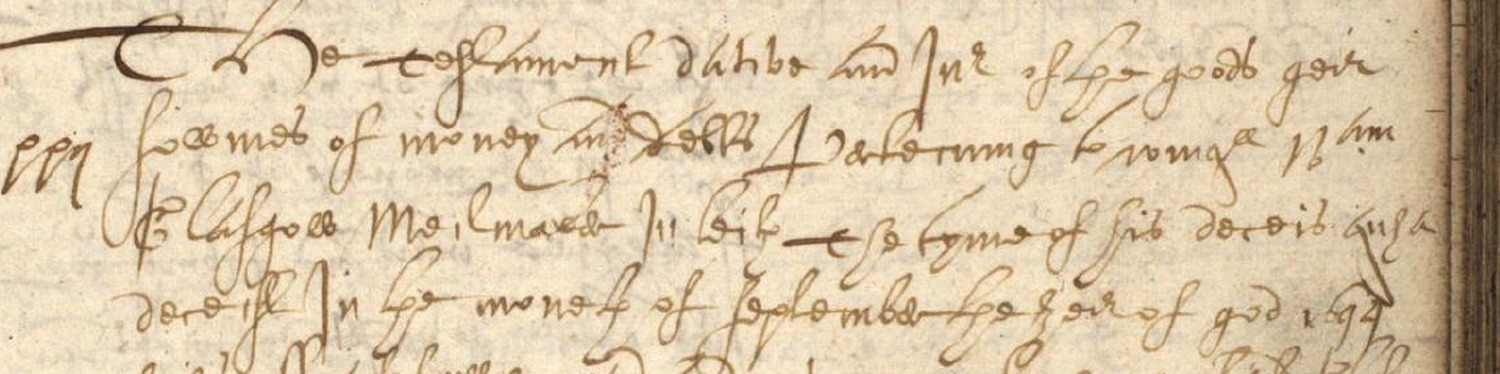
Oral testament [15?] February 1606; death an unread number of days later; confirmation [27?] August 1607
National Records of Scotland, Glasgow Commissary Court, CC9/7/5, images 82-83
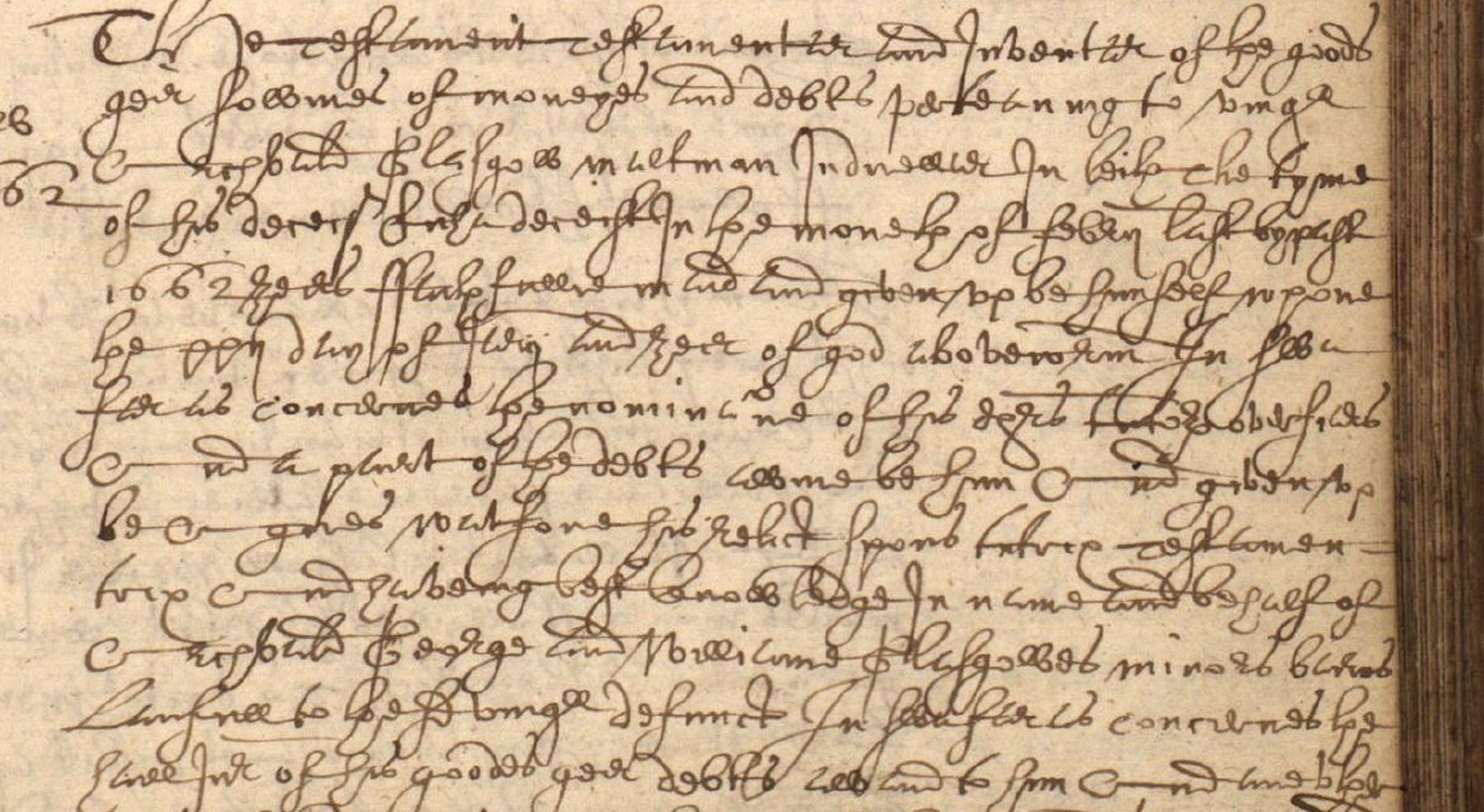
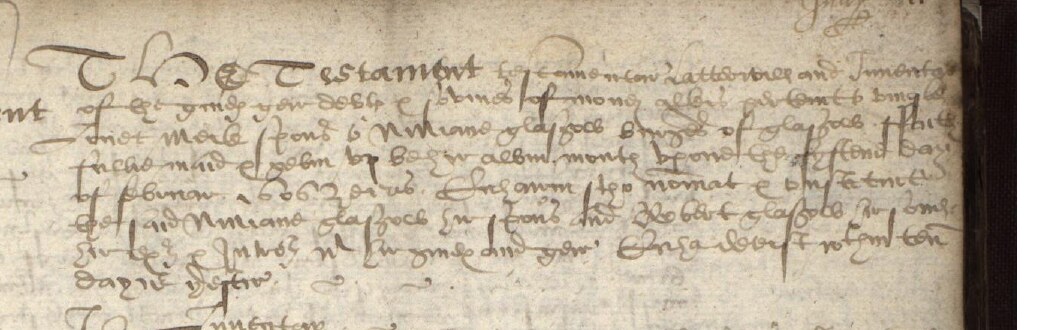
Jonet Meik was spouse of a Glasgow burgess whose forename is probably Niniane. She made the testament orally in February 1606 and died an unread number of days later.
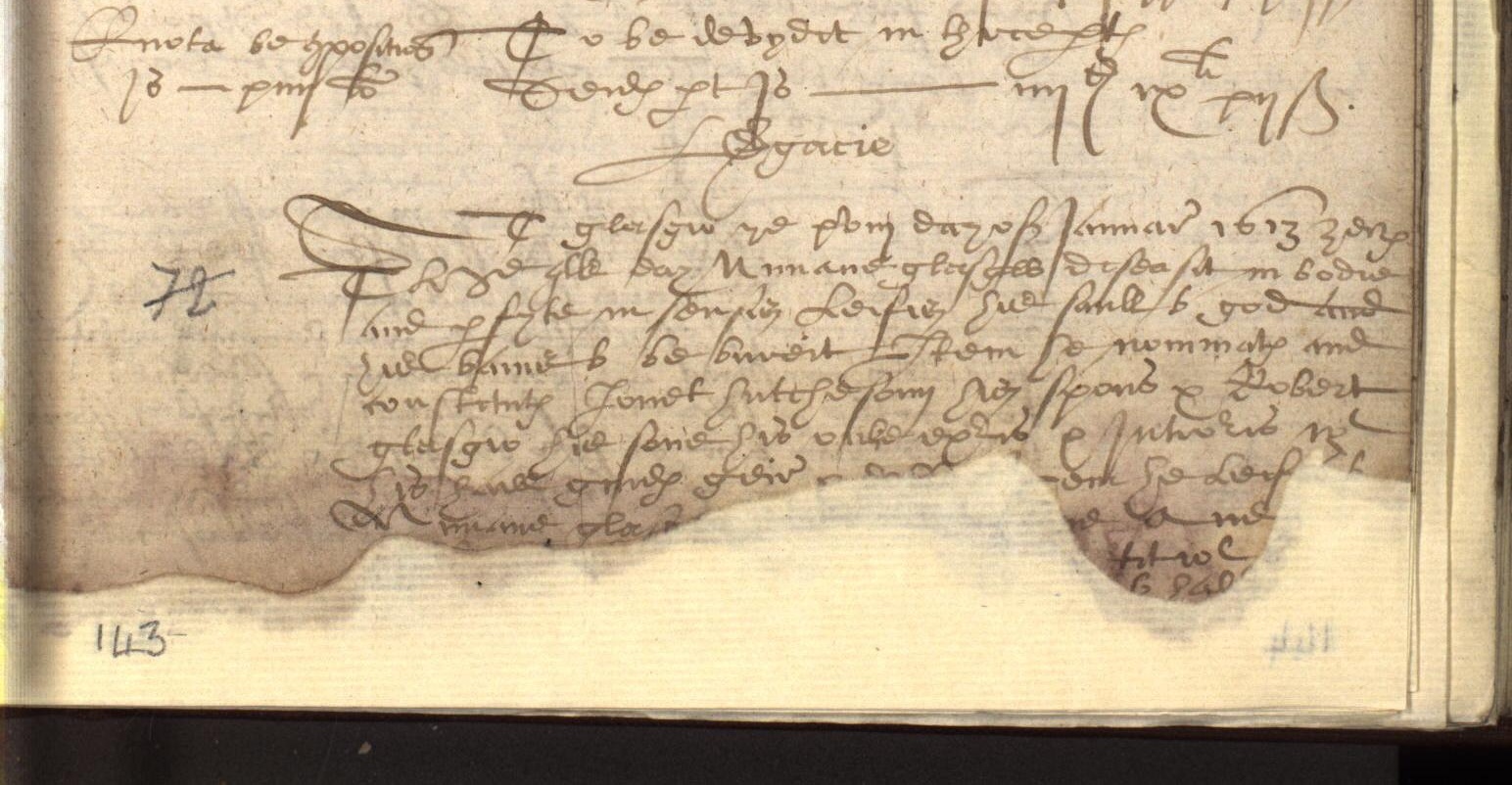
1662-01-13 (court/index date; death in 1661, month unresolved)
National Records of Scotland, Lanark Commissary Court, CC14/5/6, images 138-139; indexed 13 January 1662
This is the testament dative and inventory of John Glasgow in Quothquan, Libberton parish, Lanarkshire. It places his death in 1661 but the month remains unreadable.
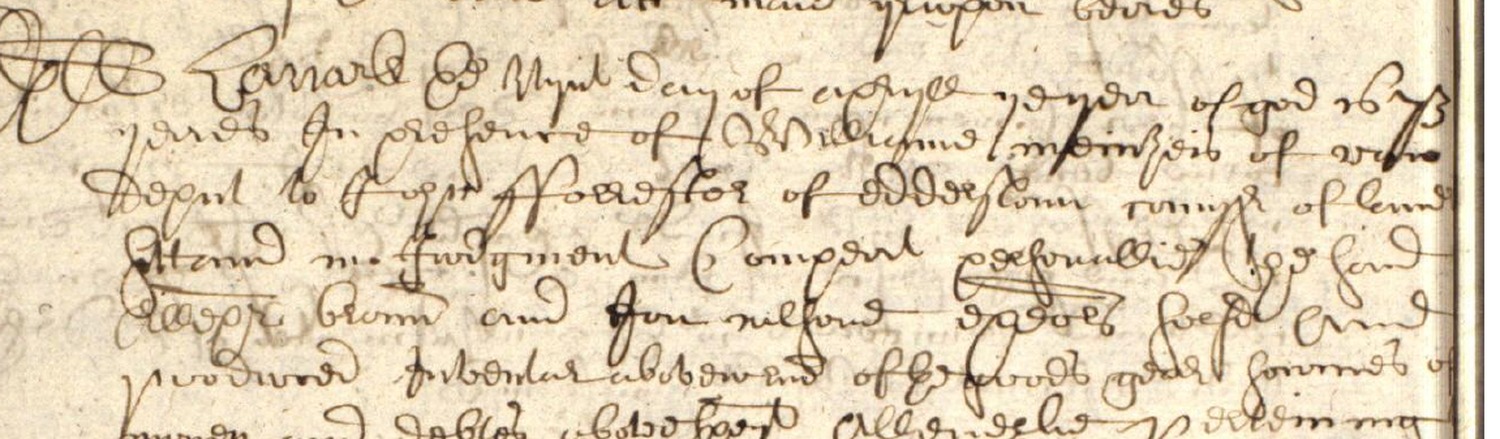
1673-04-09 (court date; death month/year not securely resolved)
National Records of Scotland, Lanark Commissary Court, CC14/5/9, images 24-26
This is William Glasgow's Lanark Commissary Court testament dative and inventory. The manuscript locality and death month remain obscured; Quothquan comes from the maintained index-based identification rather than a fresh reading of the gutter.
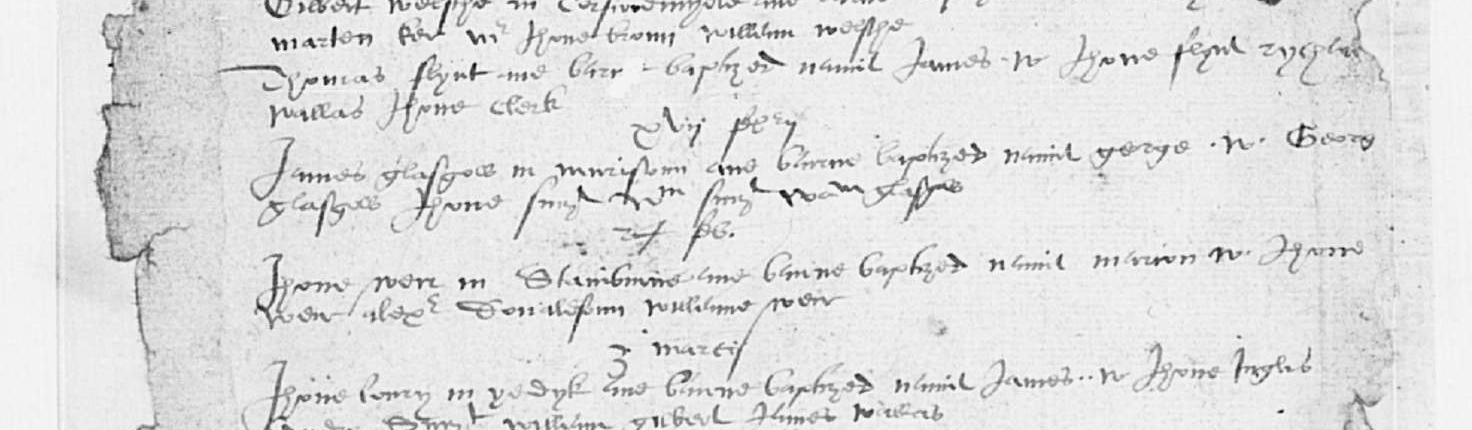
Under 17 February, the register records a child named George being baptised to James Glasgow, whose residence is provisionally read as Muirestoun. The witnesses include George Glasgow and John Smith; the remaining name is unresolved.